The Tangible Advantage: Why High-End Brands Are Returning to Premium Print in a Digital World
In an era defined by algorithmic feeds and five-second ad skips, something unexpected is happening inside the marketing departments of America's most prestigious companies: executives are ordering brochures. Not as a nostalgic gesture or a budgetary afterthought, but as a deliberate, data-informed strategic choice. The resurgence of premium print materials among luxury brands and enterprise B2B firms represents one of the more compelling reversals in modern marketing — and understanding why it is happening reveals something fundamental about how human beings process information and assign value.
The Psychology of Touch: Why Physical Materials Command Attention
Neuroscience research has consistently demonstrated that tactile experiences engage the brain differently than visual-only stimuli. A study conducted by the United States Postal Service's Office of Inspector General, in collaboration with the Center for Neural Decision Making at Temple University, found that physical advertising materials produced stronger emotional responses and were more likely to be internalized than their digital counterparts. Participants showed greater activity in areas of the brain associated with value and desire when handling physical materials.
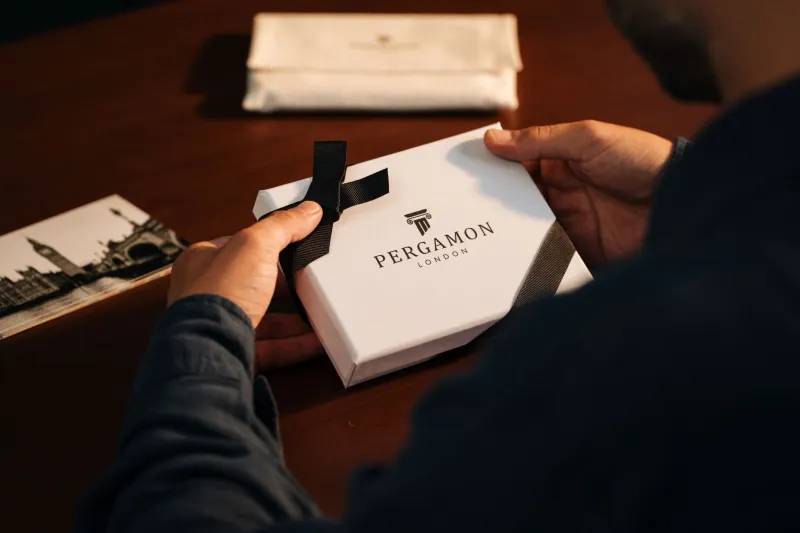
For luxury brands, this neurological reality translates directly into brand perception. When a prospective client receives a weighty, matte-laminated brochure printed on 130-pound coated stock, the physical sensation communicates something before a single word is read. Heft implies substance. Texture implies craftsmanship. The medium, in a very literal sense, becomes part of the message.
This is precisely why companies operating in premium market segments — wealth management firms, high-end real estate developers, bespoke automotive brands, and luxury hospitality groups — have continued investing in print even as their digital budgets expanded. The two channels serve fundamentally different psychological functions.
Digital Saturation and the Credibility Gap
The average American adult is now exposed to somewhere between 4,000 and 10,000 digital advertisements per day, depending on the source of the estimate. The practical consequence of this volume is not engagement — it is immunity. Banner blindness, ad blockers, and conditioned scrolling behavior have collectively eroded the effectiveness of digital display advertising at an accelerating rate.
Luxury brands face an additional complication: digital advertising's democratization has made it difficult to signal exclusivity. The same programmatic platforms that serve ads for budget airlines also serve ads for private jet charter services. The visual context collapses distinctions that premium brands depend upon to justify their positioning.
A well-produced print brochure, by contrast, arrives in a context that is inherently selective. It is mailed to a curated list, handed to a qualified prospect at a trade event, or placed in the lobby of a flagship location. The distribution itself communicates selectivity — and selectivity is the foundational promise of luxury.
Case Studies: How Fortune 500 Companies Are Leveraging Print
Several high-profile corporate examples illustrate the strategic logic at work.
In the commercial real estate sector, major developers marketing Class A office properties in markets such as New York, Chicago, and Los Angeles have moved away from PDF-only presentations toward elaborately produced physical brochures that incorporate architectural photography, textured paper stocks, and foil-stamped covers. Leasing teams report that physical leave-behinds remain on decision-makers' desks for weeks — a form of repeated brand exposure that no digital impression can replicate.
Within the financial services industry, private banking divisions at several of the country's largest institutions have reintroduced print prospectus materials for high-net-worth client onboarding. The rationale, as expressed by marketing leadership at these firms, is straightforward: clients entrusting seven- and eight-figure portfolios to an institution expect a communication experience commensurate with that relationship. A PDF feels transactional. A beautifully printed document feels like a commitment.
The automotive sector provides perhaps the most visible example. Premium and ultra-premium vehicle manufacturers — including brands with significant American market operations — maintain robust print brochure programs for their dealership networks and direct mail campaigns. Consumer research conducted within the industry consistently shows that buyers who engage with physical materials prior to a dealership visit arrive with higher purchase intent and shorter decision timelines.
The Conversion Argument: Print's Measurable Impact
Beyond perception, there is a growing body of evidence that print materials contribute meaningfully to conversion outcomes. The Data & Marketing Association has reported that direct mail, including brochure-format materials, achieves response rates significantly higher than email or paid digital channels for comparable offers. For high-consideration purchases — the category in which luxury and enterprise B2B products almost universally fall — the advantage is even more pronounced.
The mechanism is durable exposure. A digital advertisement disappears the moment a user navigates away. A brochure persists. It sits on a counter, travels in a briefcase, gets passed to a colleague, or resurfaces during a decision-making conversation weeks after initial receipt. Each of those moments represents an additional brand impression at zero incremental cost.
Integrating Print Into a Modern Marketing Strategy
The most effective approaches do not position print and digital as competing channels. Rather, premium brands are designing integrated campaigns in which each medium plays to its strengths. A digital campaign generates awareness and drives initial interest. A physical brochure, requested through a landing page or delivered at a qualifying event, provides the depth and credibility that closes the consideration gap.
QR codes, personalized URLs, and augmented reality integrations are increasingly embedded within print materials, creating measurable digital touchpoints without sacrificing the tactile authority of the physical piece. This hybrid approach satisfies both the analytical demands of modern marketing accountability and the experiential demands of luxury brand positioning.
What This Means for Your Print Strategy
The return of premium print is not a rejection of digital marketing — it is a recognition that different media serve different purposes in the customer journey. For brands competing in premium or complex B2B markets, the question is no longer whether print deserves a place in the marketing mix. The more relevant question is whether your current print materials are executing at the level your brand demands.
Paper stock, print finishing, information architecture, and design quality are not aesthetic indulgences. They are functional components of brand communication that directly influence how prospects assess your credibility, your attention to detail, and ultimately, your suitability as a partner or provider. In a marketplace where digital noise has never been louder, the quiet authority of a well-crafted brochure may be the most powerful signal a premium brand can send.