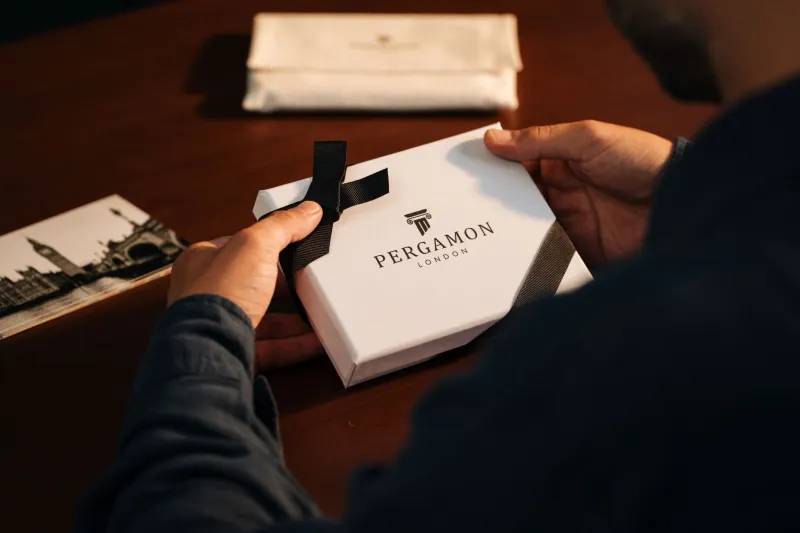
From Screen to Hand: How Print Becomes the Closing Move in Omnichannel Marketing
Photo: Internet Archive Book Images, No restrictions, via Wikimedia Commons
There is a moment in nearly every sale when digital momentum stalls. The prospect has visited the website, opened the email, maybe even watched a product video—but the decision still hasn't arrived. For a growing number of sophisticated marketers, that stall point has a solution that predates the internet: a well-crafted piece of print placed deliberately in the prospect's hands.
This is not nostalgia. It is strategy.
In 2024, the most effective omnichannel campaigns treat printed materials not as a legacy relic but as a precision instrument—deployed after digital engagement has done its early work, and before a purchase decision fully crystallizes. Understanding when and why this handoff works requires examining both the psychology of physical media and the mechanics of modern sales funnels.
The Digital Warm-Up, the Print Close
The conventional omnichannel framework positions digital channels as the primary drivers of awareness and consideration. Social media introduces the brand. Email nurtures interest. A website provides depth. What this model often underestimates is the final mile—the transition from informed interest to committed action.
Print materials, particularly brochures, occupy a unique position in that transition. Research from the Data & Marketing Association has consistently shown that direct mail and printed collateral achieve higher response rates among prospects who have already encountered a brand digitally. The reason is partly psychological: a physical object signals investment. A company that sends a beautifully produced brochure is communicating, implicitly, that it takes its offering seriously enough to put it on paper.
For B2B companies especially, this signal carries weight. A procurement officer or department head who has browsed a vendor's website is still navigating abstraction. A printed capabilities brochure on the desk becomes a reference point—something that persists through meetings, gets passed to colleagues, and survives the inbox purge.
Case Study: A Regional Commercial Real Estate Firm
Consider the approach taken by a mid-sized commercial real estate firm in the Chicago metro area. The company had invested heavily in digital advertising targeting business owners searching for office and warehouse space. Click-through rates were solid, and the website generated a steady stream of inquiry forms. Conversion from inquiry to consultation, however, remained stubbornly low.
The firm's marketing team introduced a two-step sequence: after an online inquiry was submitted, a personalized property overview brochure was mailed within 48 hours. The brochure included the specific properties the prospect had viewed online, market data relevant to their industry, and a direct contact card for their assigned agent.
Over six months, consultation bookings among mailed prospects increased by 34 percent compared to those who received only a follow-up email. The brochure did not replace the digital experience—it extended and validated it. Prospects who had already self-qualified online received something that confirmed the company's credibility in physical form.
The B2C Parallel: Retail and Considered Purchases
The same dynamic plays out in consumer markets, particularly in categories where purchases require deliberation. Home furnishings, luxury goods, financial services, and healthcare providers all benefit from the same principle: digital channels create awareness and curiosity, while print materials support the slower, more considered phase of evaluation.
A specialty kitchen design studio in the Pacific Northwest began integrating printed lookbooks into its follow-up process after customers submitted online design consultation requests. The lookbooks, featuring completed projects and material samples, were mailed the day after the initial digital touchpoint. The studio reported that customers who arrived at in-person consultations having received the lookbook spent an average of 40 percent more time in the meeting and were significantly more likely to proceed to a design contract.
The explanation offered by the studio's owner is instructive: "Customers came in already feeling like they knew us. They'd been holding our work in their hands for a week before they walked through the door."
Designing the Handoff Intentionally
For print to function effectively as a closing touchpoint, it cannot simply be a generic catalog dropped into an envelope. The piece must be designed with the digital journey in mind.
Several principles guide effective handoff materials:
Relevance to prior engagement. If a prospect engaged with a specific product category or service line online, the print piece should reflect that interest. Variable data printing technology now makes it feasible to customize brochures at scale, ensuring that the physical piece feels like a continuation of the digital conversation rather than a generic broadcast.
Credibility reinforcement. The print piece should answer the questions that digital content often leaves open. Testimonials, case studies, certifications, and specific outcome data all perform well in printed format because they are perceived as more deliberate and harder to fabricate than web copy.
A clear, singular call to action. Unlike a website, which can support multiple conversion paths, a closing brochure should direct the reader toward one specific next step—a phone call, a scheduled visit, or a response card. Clarity at this stage is not limiting; it is decisive.
Quality that matches the brand promise. Paper stock, print finish, and binding all communicate something. A financial advisory firm that sends a flimsy, poorly printed brochure is undermining its own positioning. The tactile experience of the piece is part of the message.
Timing Is the Variable Most Often Ignored
Perhaps the most underappreciated element of print-as-closer is timing. A brochure mailed three weeks after a digital interaction has lost most of its relevance. The same piece mailed within 24 to 72 hours of that interaction arrives while the brand is still present in the prospect's mind—reinforcing rather than reintroducing.
This requires operational alignment between digital marketing systems and print fulfillment processes. Businesses that have invested in connecting their CRM or marketing automation platforms to on-demand print workflows report significantly better results than those treating print as a separate, slower campaign channel.
Print in the Omnichannel Stack
The brands achieving the best results in 2024 are not choosing between digital and print—they are sequencing them. Digital earns attention and generates intent signals. Print converts intent into confidence. Together, they form a handoff that neither medium can execute alone.
For marketers willing to look beyond open rates and click-through percentages, the question is not whether print still works. The evidence is clear that it does. The more productive question is: at which exact moment in your buyer's journey would a physical piece in their hands make the difference between a prospect who keeps thinking and a customer who moves forward?